Both gold roses and preserved roses start as real flowers, but they go through very different processes and last for very different amounts of time. A preserved rose is treated with a glycerin or silica solution to maintain its soft texture and color for roughly one to three years.
A 24K gold-dipped rose is preserved first, then electroplated in certified gold, sealing it permanently. It lasts a lifetime. If you want a keepsake that never degrades, a gold rose is the clear choice.
If you prefer the soft, natural petal feel and do not need it to last more than a few years, a preserved rose works.
Gold Rose vs Preserved Rose at a Glance
| Feature |
24K Gold-Dipped Rose |
Preserved Rose |
| Lifespan |
Lifetime (with basic care) |
1–3 years |
| Material |
Real rose, preserved and electroplated in certified 24K gold |
Real rose, treated with glycerin or silica solution |
| Texture |
Metallic — feels like fine jewelry |
Soft — feels similar to a fresh petal |
| Appearance |
Gleaming gold, silver, platinum, or rose-gold finish |
Retains natural color (red, pink, white, dyed shades) |
| Durability |
Highly durable — sealed in metal, resistant to air and moisture |
Fragile — petals can crack, fade, or dry out over time |
| Maintenance |
None — dust occasionally with a soft cloth |
Avoid humidity, direct sunlight, and touching petals |
| Personalization |
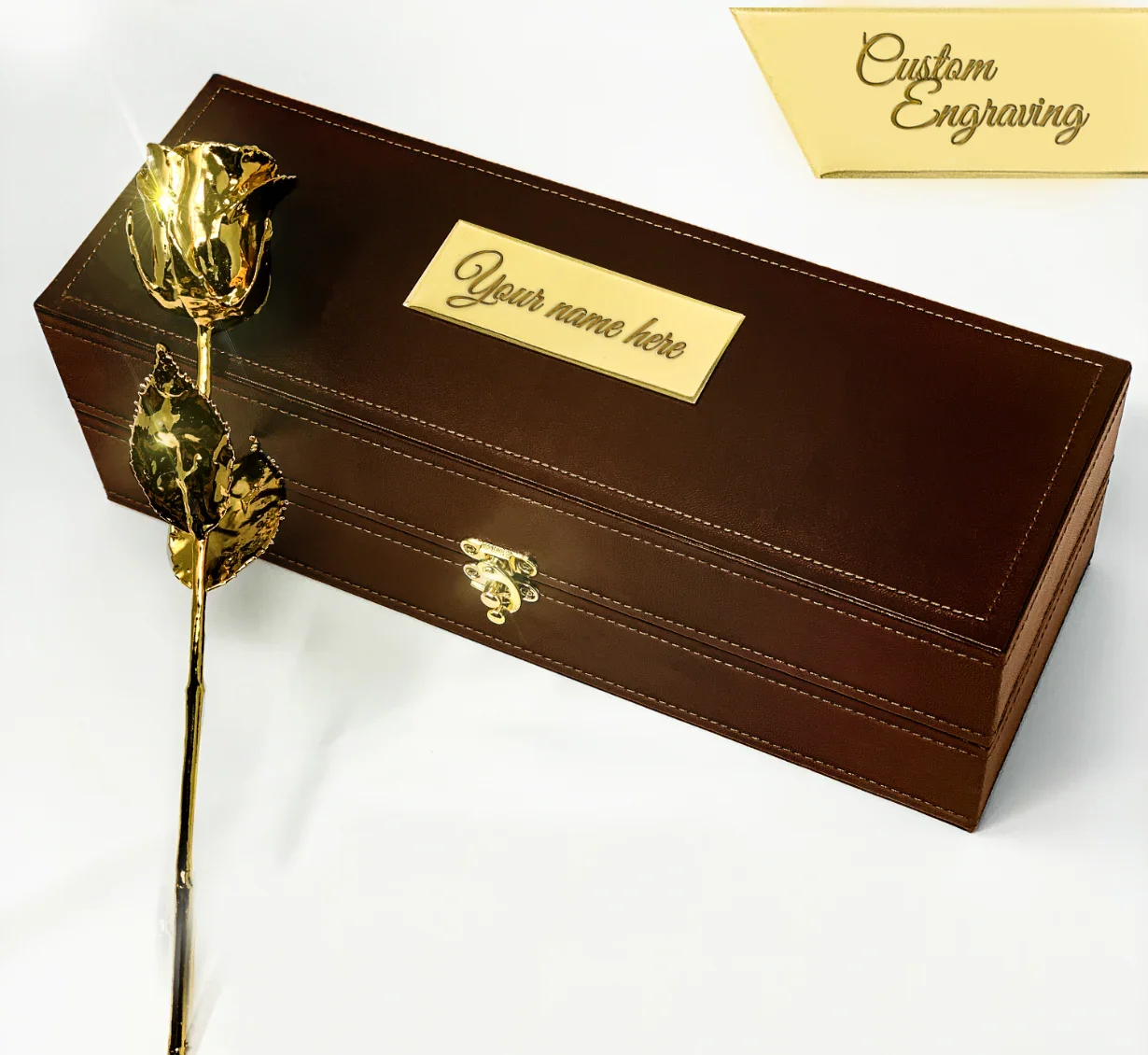
Engraved leather presentation box |
Typically none |
| Presentation |
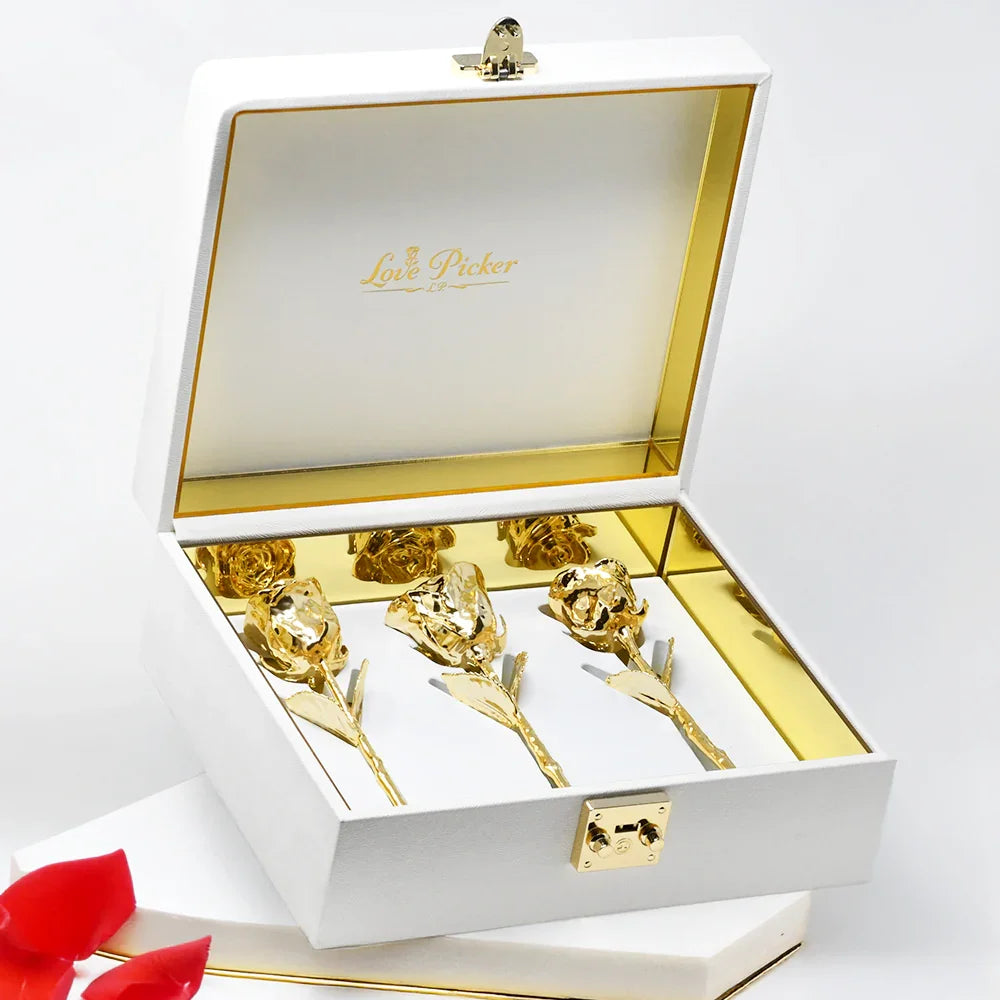
Leather box with satin lining and gold-tone hardware |
Acrylic box, hat box, or glass dome |
| Price range |
$125–$370 |
$40–$300+ |
| Gift category |
Luxury keepsake / heirloom |
Decorative floral piece |
How Each One Is Made
Preserved Roses
A preserved rose starts as a fresh-cut bloom, usually an Ecuadorian long-stem rose chosen for its large head and sturdy petals. At the peak of its bloom, the rose is treated with a non-toxic preserving solution — typically glycerin-based — that replaces the flower's natural moisture. This locks in the soft texture, shape, and color of the petals without the need for water.
The result looks and feels remarkably close to a fresh rose. Petals remain soft to the touch, and the rose retains its natural color or can be dyed into shades not found in nature (deep blues, blacks, metallics). Brands like Venus et Fleur, Eternal Roses, and The Million Roses have built their businesses around this format.
The catch: preserved roses are not truly permanent. Most last one to three years under ideal conditions — kept out of direct sunlight, away from humidity, and never touched or handled. Over time, the glycerin treatment breaks down. Petals can become brittle, colors fade, and the rose slowly deteriorates.
24K Gold-Dipped Roses

A gold-dipped rose also starts as a real natural rose, hand-selected at peak bloom. But after the initial preservation step, the process goes further. The rose is coated with a conductive layer, then electroplated in certified 24K gold (or silver, platinum, or rose gold). This metal shell seals the entire bloom — every petal, vein, leaf, and stem — in a permanent protective coating.
The result is a rose that looks like a piece of fine jewelry. The natural shape and detail of the original flower are visible through the metal finish. Every curve, fold, and imperfection of the real rose is captured and preserved permanently.
Because the rose is encased in metal, it is not vulnerable to air, moisture, or UV exposure the way a glycerin-preserved rose is. It does not degrade over time. It does not need to be kept in a sealed box or protected from humidity. It simply lasts.
See how LovePicker's gold roses are made
Durability: 1–3 Years vs a Lifetime
This is the most important difference and the reason many people choose a gold rose over a preserved rose for significant occasions.
A preserved rose is beautiful on day one. But it is slowly degrading from the moment you take it out of the box. By year two, most preserved roses show visible signs of aging — petal edges curling, colors muting, texture shifting from soft to papery. By year three, many are ready to be discarded.
That timeline is fine for home décor you plan to refresh every couple of years. It is not fine for a 25th anniversary gift, a proposal keepsake, or something you want to pass down.
A gold-dipped rose does not have a timeline. The metal shell protects it from every environmental factor that degrades a preserved rose. Ten years from now, it looks the same as it did on the day it was given. LovePicker backs this with a lifetime warranty.
Look and Feel
This comes down to preference, and both options have genuine appeal.
Preserved roses retain the soft, natural look and feel of a fresh flower. If you hand someone a high-quality preserved rose without telling them, they might think it was just picked. The petal texture is soft, the colors are vivid, and the overall impression is of a real flower frozen in time. For people who love the organic beauty of a natural bloom, this is a strong draw.
Gold-dipped roses trade that soft, natural feel for something more dramatic and permanent. A gold rose catches light. It gleams. It reads as a luxury object — part flower, part jewelry. The natural detail of the original rose (petal veins, leaf texture, stem thorns) is still visible, but the overall impression is unmistakably metallic and refined.
LovePicker offers four finishes — 24K gold, silver, platinum, and rose gold — so the aesthetic can be matched to the recipient's taste or existing décor.
Presentation and Packaging
Preserved roses are most commonly sold in acrylic boxes, round hat boxes, or glass domes. The packaging varies widely by brand and price point. Some are elegant, some feel mass-produced. Because preserved roses are fragile, the packaging often doubles as the display case — the rose stays in the box permanently.
Gold-dipped roses from LovePicker are presented in handcrafted leather boxes with satin lining and gold-tone hardware. The box opens like a fine watch case, creating a deliberate unboxing experience. The rose can be displayed inside the box or removed and placed in a 24K Gold Dipped Vase for a standalone display.
Critically, LovePicker is the only brand that engraves the presentation box. A name, date, or message is etched permanently into the box lid — turning the packaging itself into part of the keepsake.
Browse engraved box styles
The Cost Comparison
Preserved roses and gold roses overlap in price more than most people expect.
| Format |
Typical Price Range |
How Long It Lasts |
| Single preserved rose (box) |
$40–$90 |
1–3 years |
| Preserved rose arrangement (multi-rose box) |
$150–$500+ |
1–3 years |
| Single 24K gold-dipped rose (with leather box) |
$125–$197 |
Lifetime |
| 3-rose gold set (heart or acrylic chest) |
$335–$370 |
Lifetime |
A single preserved rose in a nice box runs $40–$90. A single gold rose from LovePicker starts at $125. The price gap is real but narrow — and the gold rose lasts decades longer.
Where the gap closes entirely is at the higher end. A luxury preserved rose arrangement from a premium brand can easily cost $200–$500 and still degrade within three years. For the same money, a Custom Engraved 11.5" Gold Rose at $197 lasts forever.
If you are buying a preserved rose every two years to replace the one that degraded, the gold rose pays for itself after a single replacement cycle.
Pros and Cons
24K Gold-Dipped Rose
Pros:
- Lasts a lifetime — no degradation, no replacement needed
- Encased in certified precious metal (gold, silver, platinum, or rose gold)
- Highly durable — resistant to air, moisture, UV, and handling
- Engravable leather presentation box
- Certificate of authenticity and lifetime warranty
- Zero maintenance
- Functions as home décor indefinitely
Cons:
- No soft petal texture — feels metallic, not organic
- No natural color variations (fully coated in metal)
- Higher upfront cost than entry-level preserved roses
- No fragrance
Preserved Rose
Pros:
- Soft, natural petal texture that mimics fresh flowers
- Wide variety of natural and dyed colors
- Lower starting price for single roses
- Visually closest to a "real" rose
Cons:
- Degrades within 1–3 years even with proper care
- Fragile — petals crack or crumble if touched or handled
- Must be kept away from humidity, sunlight, and physical contact
- No personalization options (most brands)
- Needs eventual replacement
- No warranty on lifespan from most brands
Best For: Who Should Choose What
| If you want... |
Choose |
| A gift that lasts a literal lifetime |
Gold-dipped rose |
| A keepsake for a major milestone (anniversary, proposal, graduation) |
Gold-dipped rose |
| A personalized gift with engraving |
Gold-dipped rose |
| Something that feels like fine jewelry |
Gold-dipped rose |
| A decorative piece you plan to refresh every couple of years |
Preserved rose |
| The soft, natural feel of real petals |
Preserved rose |
| Colorful roses in shades like deep blue or lavender |
Preserved rose |
| A lower-budget floral gift under $80 |
Preserved rose |
Occasion Recommendations
Anniversary: A gold rose wins here decisively. The symbolism of a gift that never fades given on a day celebrating lasting love is hard to match. The 3-Rose Heart Shaped Box with an engraved date makes a powerful anniversary statement.
Proposal: A gold rose alongside an engagement ring creates a moment the couple remembers forever — and the rose stays as a permanent reminder of it.
Birthday: Either option works for a birthday. A gold rose is better if this is a milestone birthday (30th, 50th) where you want the gift to carry lasting weight. A preserved rose works well for a lighter birthday gesture.
Mother's Day: Moms tend to keep gifts on display for years. A gold rose holds up to that timeline. A preserved rose may not make it to the following Mother's Day in the same condition.
Home Décor: If the goal is decorating a space with floral accents, preserved roses offer more color variety. But for a statement piece — a single gold rose in a matching vase on a mantle or console table — the gold rose is unmatched.
Graduation: A gold rose with the graduation year engraved on the box becomes a permanent memento of the achievement. A preserved rose may not survive the move to the graduate's first apartment.
Shop all LovePicker roses
What Customers Say
"I bought a preserved rose box from another brand two years ago. The petals started cracking after about 14 months. Switched to a gold rose from LovePicker and the difference is night and day. This one is never going anywhere."
"I wanted something that my daughter could keep forever, not something that would slowly fall apart in a box. The gold rose was perfect. The engraving on the box made her cry."
"We display ours on the living room shelf. Guests always ask about it. A preserved rose would have been tossed by now — this still looks brand new."
Read more from 1,500+ verified reviews
Frequently Asked Questions
Are gold-dipped roses and preserved roses the same thing? No. Both start as real roses, but they go through different processes. A preserved rose is treated with glycerin to maintain its soft texture for one to three years. A gold-dipped rose is preserved first, then electroplated in certified 24K gold, sealing it permanently in metal. The gold rose lasts a lifetime; the preserved rose does not.
Do preserved roses really last forever? No. Despite marketing terms like "forever roses" and "eternity roses," most preserved roses last one to three years. The glycerin treatment degrades over time, causing petals to become brittle, colors to fade, and the overall appearance to deteriorate. Only metal-dipped roses are designed to last indefinitely.
Can you touch a preserved rose? It is not recommended. Preserved rose petals are delicate and can crack, crumble, or lose color from the oils on your hands. Gold-dipped roses are much more durable because the metal coating protects the flower from physical contact.
Is a gold-dipped rose a real rose? Yes. Every gold rose starts as a natural rose, hand-selected at peak bloom. It is preserved and then electroplated in certified 24K gold. The natural shape, petal veins, and leaf detail all come from the original flower.
Which is a better gift — gold or preserved? For milestone occasions where you want the gift to last (anniversaries, proposals, graduations), a gold rose is the better choice. For casual décor or lower-budget gifting, a preserved rose can work — just know it will need replacing within a few years.
Does LovePicker offer anything besides gold? Yes. LovePicker offers roses dipped in silver and platinum as well as rose gold, all with the same lifetime durability. Every rose comes with a certificate of authenticity.
What is the return policy? LovePicker offers a 111-day return policy and a lifetime warranty on every rose — one of the most generous guarantees in the industry.
Summary
| Question |
Answer |
| What is the difference? |
Preserved roses last 1–3 years; gold-dipped roses last a lifetime |
| Are both real roses? |
Yes — both start as natural flowers |
| Which lasts longer? |
Gold-dipped rose (lifetime vs 1–3 years for preserved) |
| Which is more durable? |
Gold-dipped — sealed in metal, resistant to air, moisture, and handling |
| Can you personalize it? |
LovePicker offers engraved leather boxes; most preserved rose brands do not |
| Price comparison? |
Gold roses start at $125; preserved roses start at $40 — but gold lasts decades longer |
| Best for milestones? |
Gold-dipped rose |
| Best for casual décor? |
Preserved rose |